
-rofu0jzei9wetsi5pscl8v2ow7wiiyv934jym7qc8g.jpg "机械手自动取制样及在线分析(定制化产品)")
In sectors such as mineral testing, metallurgical quality control, port trade, geological exploration, and third-party inspection, there is a widely held adage: “The accuracy of assay results depends 70% on sample preparation and 30% on the testing process itself.”
Many enterprises and institutions frequently encounter issues such as significant fluctuations in assay data for the same batch of ore; trade disputes arising from discrepancies between internal and external inspection results; data deviations during CMA/CNAS assessments or government spot checks; and reconciliation disputes or financial losses caused by discrepancies in incoming material acceptance values at steel mills and ports.
Most people instinctively suspect the precision of testing instruments, reagent formulations, or operational errors during testing. In reality, however, the root cause of over 80% of ore assay data deviations lies in the initial sample preparation stage.
Ore sampling and preparation form the foundation of assay work. Once an error occurs during sample preparation, no amount of sophisticated analytical instrumentation or adherence to standard testing procedures can rectify the resulting data distortion. This article provides a detailed breakdown of the five most common—yet frequently overlooked—critical errors in sample preparation. It analyzes the causes and consequences of these errors within practical operational contexts and offers standardized mitigation strategies, helping laboratories, quality inspection centers, ports, and metallurgical enterprises achieve standardized sample preparation and precise data.
I. Failure to Meet Crushing Particle Size Standards: The Root Cause of Data Discrepancies
【The Issue】
The most common problem in the crushing stage is inconsistent particle size that fails to meet national standards, characterized by a mixture of coarse and fine particles, localized over-crushing, or incomplete crushing. During manual sample preparation or operations using outdated equipment, the crushing process is sometimes simplified to save time; this results in uneven ore particle sizes—creating the appearance of a completed crushing step while actually yielding a sample that lacks representativeness.
【Impact of Errors】
Mineral dissemination characteristics vary widely; for raw materials such as precious metals, non-ferrous metals, iron ore, and coal, valuable constituents are often concentrated in specific particle fractions. Inconsistent particle size directly leads to enrichment bias during sample splitting, skewed elemental analysis results (artificially high or low), and poor repeatability in parallel sample data. Such analysis errors—stemming from particle size discrepancies—can easily trigger trade disputes between suppliers and buyers, particularly during port trade settlements and the inspection of metallurgical raw materials upon plant entry.
【Standards and Mitigation Strategies】
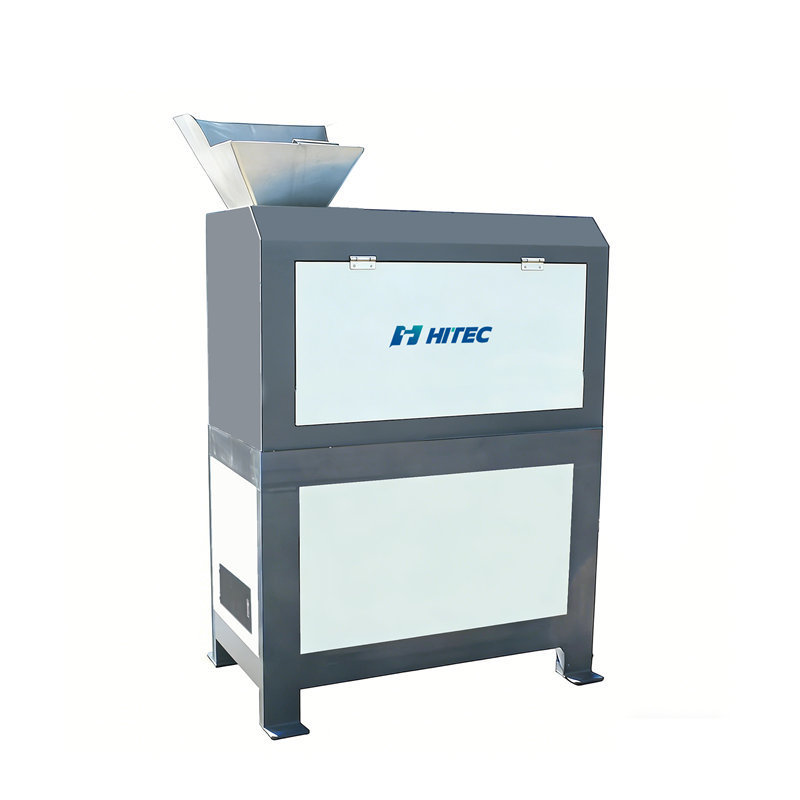
Strict adherence to domestic and international testing standards (such as GB/T and ASTM) is maintained, with multi-stage crushing processes designed according to the specific characteristics of the ore type; a standardized, progressive workflow—comprising primary, secondary, and fine crushing—replaces single-stage crushing. Specialized sample preparation equipment, including sealed jaw crushers, disc pulverizers, and vibrating mills, is utilized to ensure uniform particle size and compliance within sample batches, thereby eliminating particle size errors at the source and guaranteeing the representativeness of the samples.
II. Improper Sample Splitting: Complete Loss of Sample Representativeness
【Common Errors】
Sample splitting is a critical stage in sample preparation and the step most prone to operational errors. Common mistakes include: careless execution of the manual cone-and-quartering method, uneven spreading of material, and non-standard selection of sampling points; failure to adhere to specified splitting ratios or excessive splitting resulting in insufficient sample mass; and unstable equipment rotation speeds or uneven material splitting, leading to a shift in sample composition.
【Impact of Errors】
The primary objective of sample splitting is to reduce the sample mass without altering its composition. Improper splitting directly results in a small sample that fails to represent the bulk raw material, leading to a scenario where “sampling bias causes total failure.” This is particularly critical for ores with mixed high and low grades or coal/mineral materials with uneven moisture content; errors during splitting can lead to severely distorted analytical data for key elements such as gold, silver, iron, manganese, and lithium.

[Standard Protocols and Mitigation Strategies]
Moving away from arbitrary manual sample reduction, standardized operations must strictly adhere to the principles of uniform material spreading, multi-point sampling, and symmetrical reduction. For large-scale testing scenarios, priority is given to automated equipment—such as fully automatic riffle splitters and rotary sample dividers—to ensure precise mechanical splitting. This approach eliminates human error and guarantees that the composition, particle size, and moisture content of each retained sample match those of the raw ore, thereby significantly enhancing data stability.
III. Cross-Contamination from Sample Residue: A Highly Insidious Source of Long-Term Error
【Nature of the Error】
Sample contamination is a classic “hidden error”; it often goes undetected yet persistently compromises testing accuracy. In routine operations, cross-contamination occurs when residual mineral dust from a previous batch remains in equipment chambers, screens, or discharge outlets and is carried over into the processing of the next sample. It also arises from sharing equipment and tools across different ore types or grades, as well as from the mixing of tools or the presence of residual dust on work surfaces during manual sample preparation.
【Impact of the Error】
Even minute amounts of residual mineral dust can alter test results for low-concentration elements. In applications such as precious metal fire assay, trace impurity analysis, and testing for new energy minerals (lithium, cobalt, rare earths), cross-contamination directly leads to artificially high readings and inconsistent batch data. Consequences range from failed test results and the need for retesting or rework to the invalidation of third-party reports and errors in bidding or trade settlements.
【Standards and Mitigation Strategies】
Establish dedicated cleaning protocols for all equipment, ensuring that dust residues are thoroughly removed from chambers, screens, and conduits after each batch is processed. Prioritize the use of specialized sample preparation units that are detachable, fully sealed, and easy to clean; equipment should feature wear-resistant, non-stick interior surfaces and a design that eliminates dust-trapping “dead zones.” Additionally, standardize operational workflows by processing different ore types separately and using dedicated tools in designated areas to completely eliminate the risk of cross-contamination.
Ⅳ. Moisture loss is out of control: indirectly changing the element conversion results
【Error phenomenon】
Many testers tend to ignore the impact of moisture on test data. During the sample preparation process, open-air operations, poor equipment sealing, long-term exposure, and irregular high-temperature drying will all lead to rapid loss of free moisture in ore samples. Especially for mineral materials with high moisture content such as coal, clay minerals, and moist concentrates, the problem of water loss is particularly prominent.
【Error hazard】
The ore test results must eventually be converted into dry basis data for settlement and archiving. Inconsistent moisture loss in samples will directly lead to dry basis conversion deviations, leading to situations where “the wet sample is qualified but the dry basis exceeds the standard” or the data fluctuates abnormally. In the measurement and settlement of port bulk mineral trade and metallurgical raw materials entering the factory, numerical errors caused by moisture deviation will directly cause economic losses and reconciliation disputes for the enterprise.

[Standards and Mitigation Strategies]
A fully enclosed sample preparation process is employed throughout—spanning sampling, crushing, splitting, and sample retention—to minimize the sample’s exposure to air and reduce processing time. The workflow incorporates a temperature- and humidity-controlled sample storage room and standardized drying procedures; moisture content is determined in strict accordance with national standards, utilizing uniform criteria for dry-basis conversion. The automated sample preparation system enables a completely enclosed operation, maximizing the retention of the sample’s original moisture content and ensuring the accuracy of data conversion.
V. Sample Environmental Contamination: Minute Details Determine Compliance
【Common Issues】
Beyond cross-contamination caused by equipment, external environmental contamination is a significant source of sample preparation errors. Issues such as excessive dust in the workspace, airborne impurities settling onto samples, unclean preparation tools or containers carrying contaminants, and residual dust on operators’ gloves or uniforms—as well as substandard laboratory ventilation and dust removal systems—can all lead to secondary sample contamination.
【Impact of Errors】
In processes such as fire assay for precious metals, trace mineral element analysis, and high-purity mineral testing, trace metal dust and impurities in the environment can directly interfere with test results, leading to data distortion. Furthermore, a disorderly or unsanitary sample preparation environment and non-compliant dust control practices prevent laboratories from passing CMA and CNAS assessments or government quality compliance inspections, thereby undermining the laboratory’s qualifications and credibility.
【Standards and Mitigation Strategies】
Establish standardized, dust-free sample preparation workshops equipped with professional dust removal, ventilation, and air purification systems. Mandate the use of dedicated, clean sample preparation containers and tools—cleaned and disinfected prior to use—and standardize operational workflows. Utilize fully enclosed, intelligent sample preparation equipment to isolate samples from external dust contamination at the source, ensuring a dust-free, clean, and standardized process that balances data accuracy with regulatory compliance.
Conclusion: Standardized and Automated Sample Preparation is Key to Resolving Assay Deviations
A review of the five common sample preparation errors reveals that most assay data deviations stem not from testing technology issues, but rather from non-standardized processes, outdated equipment, and excessive human error.
Manual sample preparation relies heavily on operator experience, is prone to randomness, and involves uncontrollable margins of error. In contrast, intelligent, automated, and enclosed sample preparation systems enable standardized, end-to-end operations—addressing particle size, subsampling, cross-contamination prevention, moisture retention, and contamination control—thereby completely eliminating human error.
Our company specializes in the R&D, production, and sales of standalone mineral sample preparation equipment, automated sampling and preparation systems, complete fire assay laboratory solutions, and specialized analytical instruments. We provide comprehensive, intelligent inspection system solutions for third-party testing agencies, government quality inspection bodies, port groups, metallurgical enterprises, and geological exploration units.
We offer end-to-end support—ranging from laboratory planning, equipment configuration, and process upgrades to installation, after-sales service, and compliance guidance. We help enterprises resolve critical pain points such as data deviations, non-compliance, high labor costs, and low efficiency, ensuring that every set of ore assay data is accurate, stable, and traceable.
Please contact us for a free consultation if you would like to obtain our “Standardized Ore Sample Preparation Solution” or “Laboratory Equipment Configuration List.”